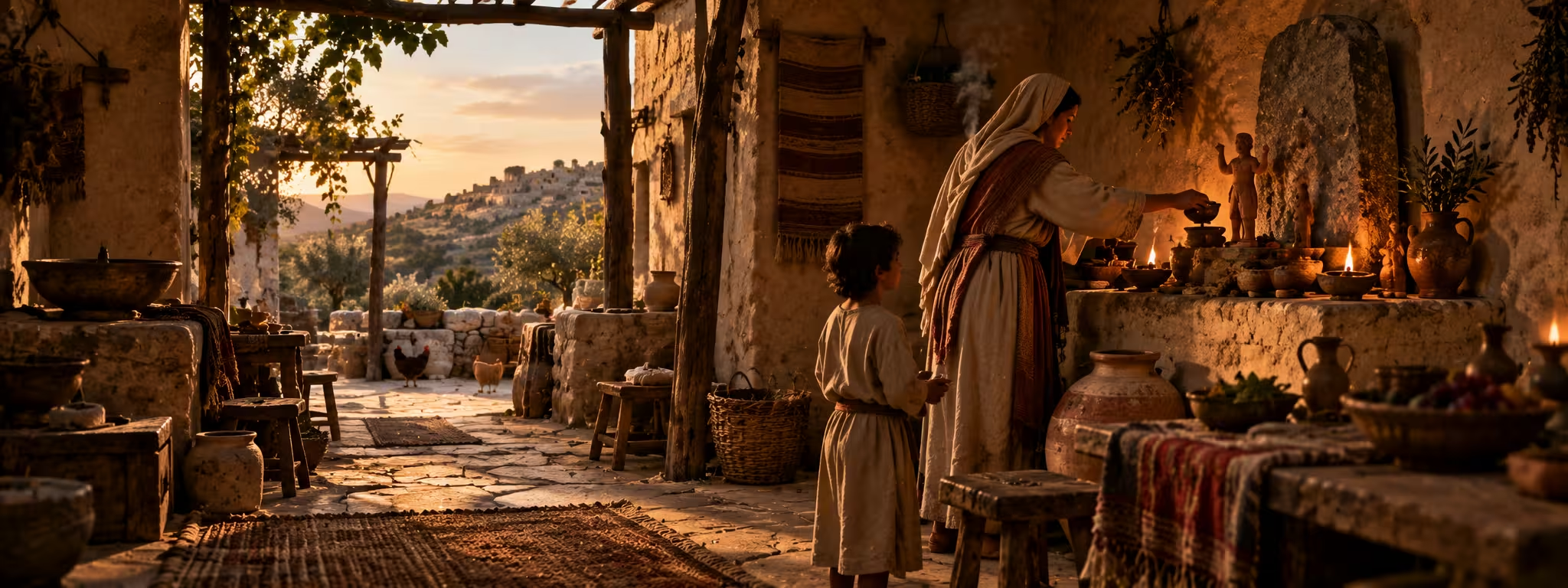
Household religious practice in the ancient southern Levant
← Back to home

Explore a theme

Lived
Religion

Religion as ordinary people actually practiced it—in homes, villages, local shrines, vows, offerings, family rituals, and habits that rarely fit neatly inside official theology.

The question

What did religion look like away from the palace and temple?

Biblical laws and reform stories tell us what some writers wanted people to do. Archaeology, inscriptions, household objects, and narrative traditions can sometimes show something different: what people actually kept in their homes, where they prayed, whom they invoked, and how local practice persisted.

That gap between official religion and lived religion is one of the most revealing places to look.

Selected evidence

A few pieces of the record

These glimpses do not reconstruct every household. They show why everyday religious practice cannot be reduced to official texts alone.

Household archaeology

Figurines and domestic religion

Judean pillar figurines and other household objects appear in domestic contexts across Judah, suggesting forms of religious practice that operated close to family life.

What it suggests
Religious life extended into the household and included practices not centered on the Jerusalem temple.
What it does not establish
A single agreed interpretation for every figurine or the identity of the figure represented.
Biblical narrative

Micah’s household shrine

Judges 17–18 remembers a private shrine with images, an ephod, teraphim, and a household priest before those objects are carried into a larger community cult.

What it suggests
Biblical tradition itself remembers decentralized and household-based religious practice.
What it does not establish
That the story is a direct ethnographic report of one recoverable household.
Texts & inscriptions

Vows, blessings, and multiple divine names

Prayers, vows, blessings, and inscriptions from the wider Levant show religion working through practical needs: protection, fertility, military danger, family welfare, and divine favor.

What it suggests
Religion was embedded in ordinary concerns rather than confined to formal doctrine.
What it does not establish
That every Israelite or Judahite practiced religion in the same way.

The larger story

What happens when ordinary practice does not match official religion?

That tension runs through Israel’s history. Prophets condemn practices people apparently considered normal. Reformers remove shrines that had been used for generations. Later texts remember some of those same practices as apostasy.

The book asks what those conflicts reveal about a religion still taking shape.