Israel within Canaan
What archaeology, language, and material culture reveal when Israel is placed back into the southern Levant.
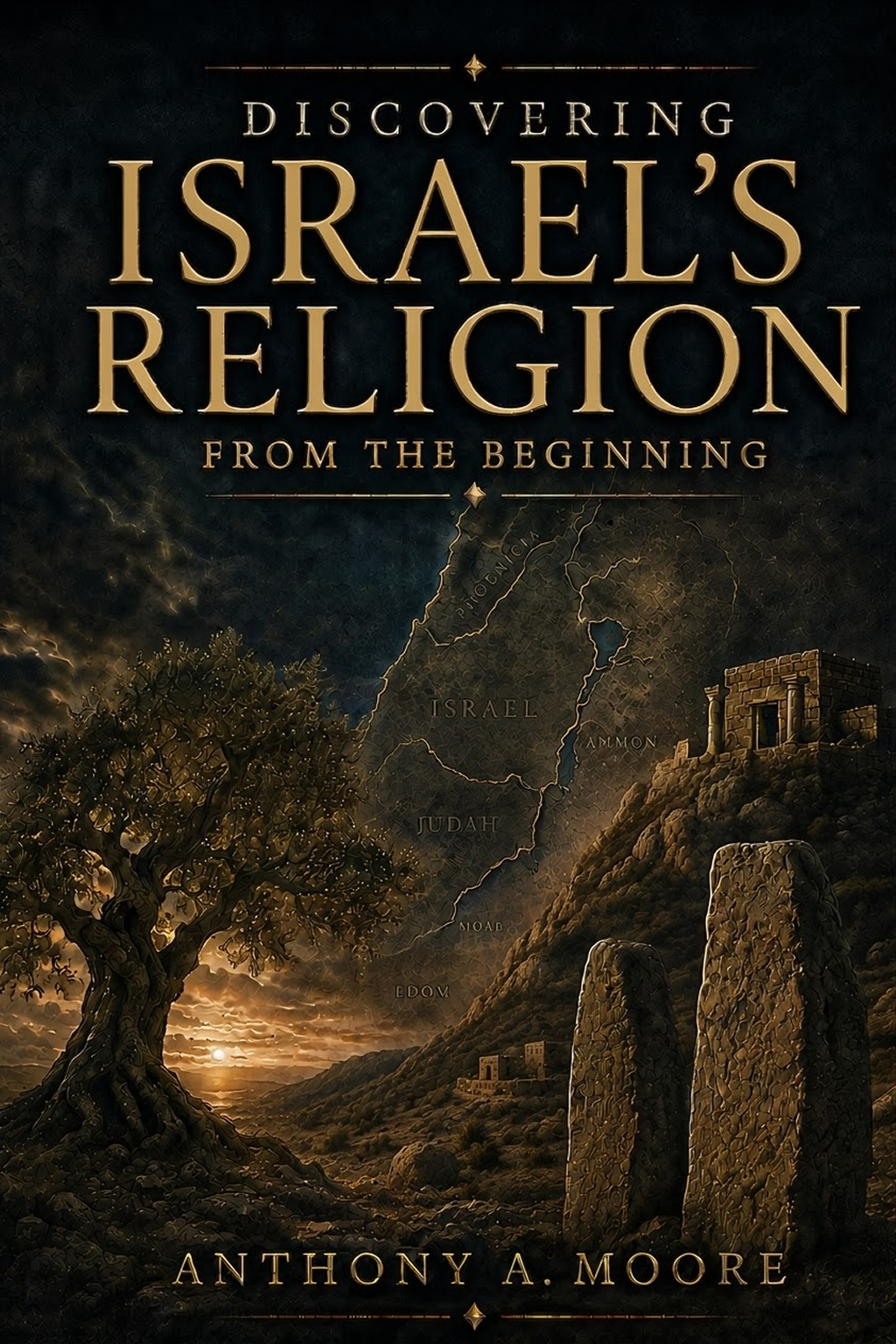
A historical journey through ancient Israelite religion
Discovering Israel’s Religion follows the evidence from Israel’s earliest cultural setting through the rise of Yahweh, ancestral gods, sacred places, kingship, Jerusalem, and the long development of a religion that would eventually be remembered very differently.
The book’s invitation
Ancient Israel did not emerge in isolation. Its people lived within the cultures of the southern Levant, surrounded by religious traditions that were already ancient. Discovering Israel’s Religion asks what happens when Israel is placed back into that world.
Biblical texts remain central to the investigation, but they are read alongside archaeology, inscriptions, ancient Near Eastern literature, historical geography, material culture, and evidence for the religion practiced by ordinary people.
What readers will encounter
What archaeology, language, and material culture reveal when Israel is placed back into the southern Levant.
How southern traditions, ancestral religion, and the wider Levantine world complicate a simple origin story.
What sacred places, households, rituals, inquiry, and local practice reveal about religion as people actually lived it.
How kingship, Jerusalem, temple, centralization, conflict, and reform reshape the religious landscape.
“Israelite religion is not the cookie-cutter monotheistic religion Christians naturally assume.”
Who this book is for
This book is written for intelligent nonspecialists—including readers who know the biblical stories well but may be encountering archaeology, historical criticism, Ugaritic religion, inscriptional evidence, or ancient Near Eastern comparison for the first time.
The book assumes curiosity, not agreement. The invitation is to slow down at the important evidence, make the connections visible, and distinguish what we know from what we infer.
A guided journey
An ancient name encountered early in the book may matter again several chapters later. A sacred place can acquire a different meaning once kingship appears. A familiar biblical passage can look different after archaeology or an inscription enters the discussion.
Research transparency
AIRA preserves more than evidence supporting the book’s conclusions. It also exposes competing explanations, limitations, counterevidence, sources considered along the way, and Evidentiary Confidence Assessments for major propositions.
The purpose is simple: readers should be able to see why a conclusion was reached, where it remains uncertain, and what evidence could change it.
See how we researched the book →Start the investigation