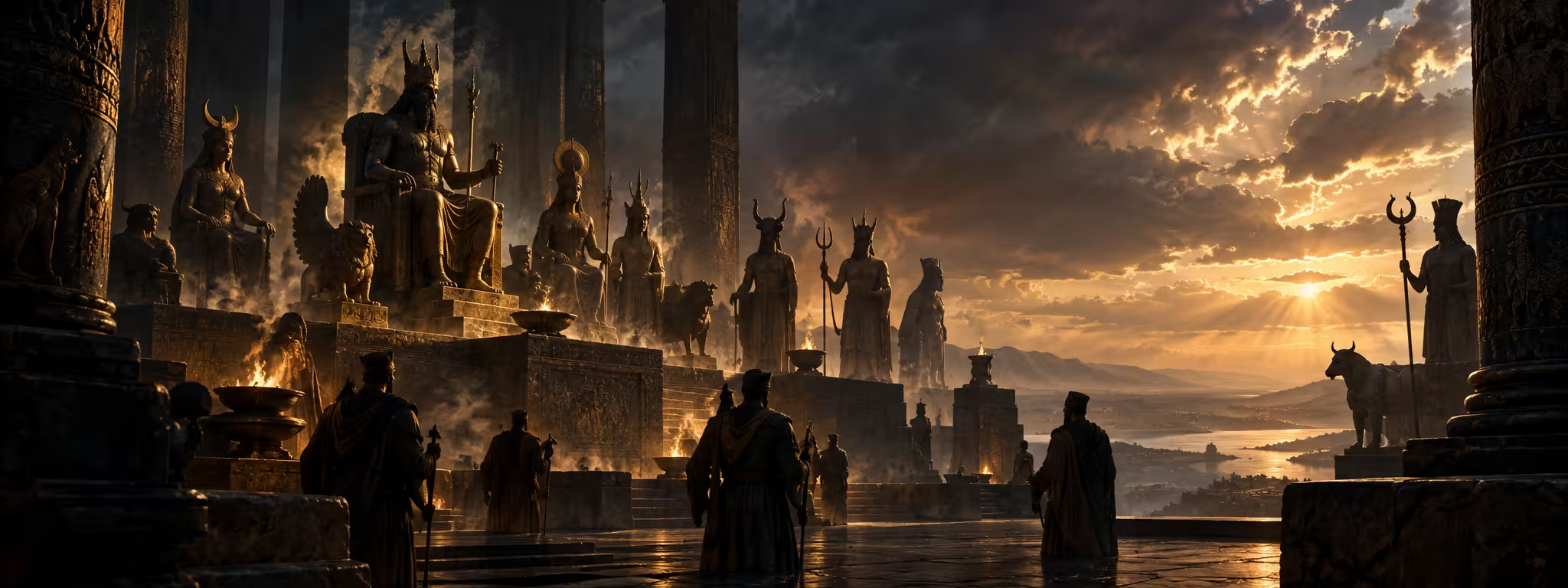
Ancient figurine representing the divine world of the Levant
← Back to home

Explore a theme

Gods &
Divine Council

Meet the divine world Israel inherited—and the older religious language that continued to echo inside Israelite texts.

The question

Was Israel’s God always imagined alone?

The biblical world did not begin with a blank religious landscape. Across the Levant, people already told stories about El, Baal, Athirat/Asherah, storm gods, sea monsters, divine assemblies, and the relationships between gods and human communities.

Israelite religion developed inside that world. The interesting question is not simply whether similarities exist, but what those similarities reveal—and where the evidence stops.

Selected evidence

A few pieces of the record

These examples are enough to open the question. The book follows how they connect across centuries of religious change.

Ugaritic texts

El, Baal, and a populated divine world

Late Bronze Age texts from Ugarit preserve a West Semitic religious world populated by named deities with recognizable roles, relationships, and conflicts.

What it suggests
Israel emerged in a region where a complex divine world was already culturally familiar.
What it does not establish
That Israel simply copied Ugaritic religion or preserved it unchanged.
Comparative poetry

Lotan and Leviathan

Ugaritic and biblical poetry preserve strikingly similar language for the fleeing and twisting serpent defeated by divine power.

What it suggests
A shared Northwest Semitic poetic inheritance behind later biblical imagery.
What it does not establish
Direct copying from the surviving Ugaritic tablets into a biblical text.
Inscriptions & biblical texts

Yahweh, Asherah, and the divine council

Iron Age inscriptions associate Yahweh with asherah-language, while several biblical passages still imagine a heavenly assembly around Israel’s God.

What it suggests
Some Israelite and Judahite settings preserved a more populated sacred world than later monotheistic summaries imply.
What it does not establish
A single uniform theology shared by every Israelite community.

The larger story

So how did Yahweh become Israel’s God?

The evidence becomes more interesting when the pieces are placed in sequence: ancestral El-language, southern Yahweh traditions, divine-council imagery, Baal-like storm language, Asherah, royal religion, reform, exile, and the eventual insistence that no other god belongs beside Yahweh.

That development is the story the book follows.